Approved Freight Forwarders
Helpful Articles - Supply Chain

Your Complete Guide to Shipping Freight from Asia to the U.S.

Nine of the United States’ top 20 trade partners are in Asia. Together, these countries traded $1.18 trillion in freight with the United States in 2019 alone, according to the Bureau of Transportation Statistics.   If you’re planning on jumping into this market by shipping freight from Asia to the United States, we’ve got you covered. Below, you’ll find our complete guide to moving cargo from Asia—including countries like China, Vietnam, South Korea, Taiwan, and more—to the U.S. We’ll show you everything you need to know to get your goods from your suppliers in Asia to your location in the U.S.—safely and easily. First, let’s...

Read More
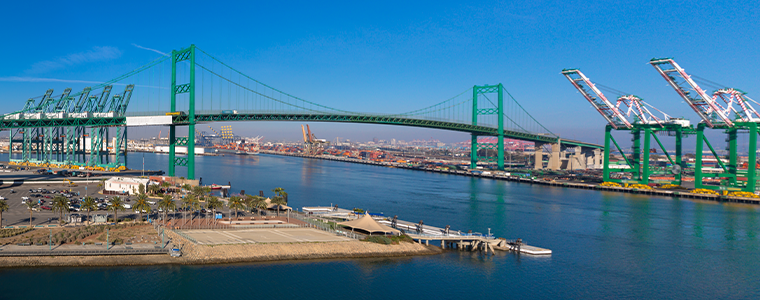

Los Angeles Real Estate Impacts Supply Chain Costs

It was a textbook case of supply and demand. That’s what drove industrial real estate rents sky-high in greater Los Angeles in 2022. And the effects may ripple all the way down the supply chain to shippers moving freight through the Ports of Los Angeles and Long Beach.   To sum up exactly what happened: Where industrial real estate—including warehouse space—was concerned, 2022 was a landlord’s market with very few vacancies. As a result, rent in Los Angeles rose in 2022, both for new tenants and existing tenants. Additionally, to compensate for inflation, some landlords added consumer price index (CPI) increases on top of rent...

Read More

Green Trucking: Spotlight on Hydrogen-Powered Trucks

The transportation sector is one of the largest contributors to greenhouse gases, making up 27% of total GHG emissions in the U.S., according to the EPA. As the industry looks toward greener solutions, two directions have emerged.   Many are looking to battery-electric vehicles (BEVs) to reduce fleet emissions. However, there’s another strong entry in the zero-emissions category: fuel cell electric vehicles (FCEVs), powered by hydrogen.   We previously took a look at the rise of electric semis. In this article, we’ll take a look at hydrogen-powered medium- and heavy-duty trucks—as well as their advantages and drawbacks—as this technology continues to develop.   Advances in...

Read More

Lunar New Year in China: Shipping Delays, Rising Costs and What to Do About Them

The celebrations in China around Lunar New Year can throw a wrench into even the most resilient supply chains. Factories shut down, orders increase in anticipation, and transportation companies try to juggle the demand with a reduced workforce.  If you’re relying on goods manufactured in China—or simply shipping through ports in the country—we’ll show you what to expect during the Lunar New Year / Chinese New Year celebrations. We’ll also give you some ideas for mitigating the impact within your operation.   In this article What Is Lunar New Year When Is the Lunar New Year Celebration in China What Happens During the Lunar New Year How...

Read More

Pandemic-Related Supply Chain Shortages Result in Higher Prices for Consumers

Recent data from the Bureau of Labor and Statistics has confirmed what many consumers have already recognized at the cash register: Prices continue to rise for goods and services. 7.9% increase in Consumer Price Index Feb. 2021-2022 From February 2021 to February 2022, the Consumer Price Index for All Urban Consumers (CPI-U) rose by 7.9%—the largest 12-month change since January 1982. . In other words, consumers are paying 7.9% more for goods and services than they were a year ago. What’s behind these sharp price increases? Basic economics of supply and demand. This balance was disrupted during the pandemic. As companies struggle to get their...

Read More

The Auto Industry’s Semiconductor Chip Shortage: A Look at This Massive Supply Chain Disruption

Empty dealership lots. Long waiting lists for new vehicles. Higher prices for both new and used cars. The semiconductor chip shortage hit the auto industry hard, impacting manufacturers, dealers, and consumers alike: Consulting firm Alix Partners has estimated that the shortage will cost the automotive industry $210 billion in lost revenue in 2021, $100 billion more than the firm’s initial estimates. AutoForecast Solutions projects that 11.3 million vehicles will be cut from production plans before the crisis is resolved. Additionally, some experts anticipate that shortages will last at least into 2023, with Cox Automotive estimating that it will take at least until 2025 for the...

Read More