January 5, 2023By: maud
The celebrations in China around Lunar New Year can throw a wrench into even the most resilient supply chains. Factories shut down, orders increase in anticipation, and transportation companies try to juggle the demand with a reduced workforce. If you’re relying on goods manufactured in China—or simply shipping through ports in the country—we’ll show you what to expect during the Lunar New Year / Chinese New Year celebrations. We’ll also give you some ideas for mitigating the impact within your operation. In this article What Is Lunar New Year When Is the Lunar New Year Celebration in China What Happens During the Lunar New Year How...
Read MoreAugust 22, 2022By: mcameron
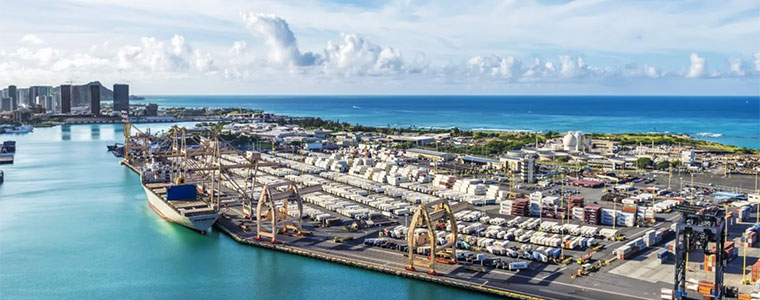
It can take as little as five days for a cargo ship to transit from the ports of Los Angeles or Long Beach to Honolulu Harbor on Oahu, Hawaii. Cargo ships bound for Hawaii’s neighbor islands—Kauai, Maui, and the Big Island—take approximately two to four additional days. That’s 7-9 days in total to transit from California to Hawaii. Transit Times from California to Hawaii (Westbound) Oahu Honolulu Harbor5 Days Maui Kahului Harbor7 Days Kauai Nawiliwili Harbor7 Days Kona Kawaihae Harbor7-9 Days Hilo Hilo Harbor7-9 Days What If You’re Shipping Eastbound? How Long Does It Take Cargo to Go from HI to CA? It takes a...
Read MoreAugust 15, 2022By: mcameron
There’s a simple answer to this question: Freight gets to Hawaii usually by boat but also often by plane. In other words, when it comes to the final leg of its journey, cargo gets shipped to Hawaii either by ocean freight or air freight. As an isolated Pacific island chain, Hawaii relies heavily on these freight modes to supply food, finished goods, construction materials, business supplies—almost everything that makes island life workable. Want a deeper look into how freight moves to Hawaii? We’ll show you exactly how Hawaii ocean freight and air freight work, as well as how these freight modes keep the state’s economy...
Read MoreJuly 11, 2022By: mcameron
Air pollution is a significant problem in the state of California. The San Joaquin Valley and South Coast Air Basins experience some of the highest air pollution levels in the United States, according to data from the EPA. Of the ten most ozone-polluted U.S. cities, seven are located in the Golden State. Additionally, a 2021 air-quality report from the Environment America Research & Policy center ranked Southern California air pollution as the worst in the country. That same report quantified the number of days of elevated ozone and/or particulate matter in several population centers in California during the year 2020: Days of Elevated Ozone and/or...
Read MoreJune 13, 2022By: mcameron
Like many other specialized sectors, companies in the transportation and logistics industry have their own professional organizations. It’s easy to think that these affiliations don’t add up to much more than a series of logos at the bottom of a company website. However, as a shipper or a potential partner to a freight forwarder, you might be surprised that these professional affiliations actually offer you benefits. Through the networking, educational, and financial opportunities offered by these organizations, freight forwarders are better positioned to deliver: A thoroughly professional experience, with trained and informed experts handling your shipment every step of the way. Seamless pickup, handling, and...
Read MoreMarch 28, 2022By: mcameron
Recent data from the Bureau of Labor and Statistics has confirmed what many consumers have already recognized at the cash register: Prices continue to rise for goods and services. 7.9% increase in Consumer Price Index Feb. 2021-2022 From February 2021 to February 2022, the Consumer Price Index for All Urban Consumers (CPI-U) rose by 7.9%—the largest 12-month change since January 1982. . In other words, consumers are paying 7.9% more for goods and services than they were a year ago. What’s behind these sharp price increases? Basic economics of supply and demand. This balance was disrupted during the pandemic. As companies struggle to get their...
Read More


 (626) 723-0722